Get support for student success - right in your inbox
NHLI | New Hampshire Learning Initiative
All Students Deserve a Quality Education
/ July 28, 2026
Teacher Leadership on Display at NHLI’s Summer Empowered Learning Conference
Estimated reading time: 7 minutes
NHLI’s 2026 Summer Conference, Empowered Learning: From Vision to Evidence, brought educators together to learn from one another, examine meaningful practices, and celebrate the expertise that exists within New Hampshire classrooms.
Throughout the event, the capacity of educators to guide the profession was evident. Participants transitioned into roles as designers, facilitators, and instructional mentors. They showcased strategies refined through their daily interactions with students—covering everything from pedagogical techniques and assessment to student involvement and performance tasks.
Participating in this conference gets the ideas flowing around Empowering Student Learning. The biggest takeaway for me was the networking and connecting with peers.
— Empowered Learning participant
Focusing on Practical Application
This professional development resonates because it is rooted in practical application. Presenters spoke candidly about their trials, insights, and shifts in perspective, highlighting how they adapted their methods to meet student needs. Their proficiency was forged authentically, within their classrooms and schools.
I will be taking more time to notice and reflect on my teaching… I’m psyched to go back!
— Empowered Learning participant
The conference created space for that expertise to move beyond one teacher, one classroom, or one district. Educators shared resources, examples, questions, and lessons with colleagues from across the state. These conversations allowed participants to see new possibilities while also recognizing that meaningful change develops through thoughtful experimentation, collaboration, and continued reflection.
Celebrating Five Years of the PLACE Project
A central highlight was the celebration of five years of the Performance Learning and Assessment Consortium for Educators (PLACE).
(Be sure to read our full 5-Year PLACE Report post to see the long-term impact and findings from this work!)
PLACE is a teacher-led network that brings educators from across districts and content areas together to design meaningful assessments, strengthen classroom instruction, examine evidence of student learning, and build shared professional expertise.
Over time, the work has also created a strong statewide community of educators whose relationships and collaboration continue well beyond the project itself. This initiative has empowered staff to craft evaluations, analyze student outcomes, and establish rigorous benchmarks for academic excellence. The milestone underscored the importance of long-term support for educator-led initiatives and the creation of collaborative learning networks.
Just as important as the instructional and assessment expertise developed through PLACE is the collegiality that has grown within its content teams. Teachers from different schools and districts have worked side by side over several years, sharing ideas, reviewing student work, solving problems, and supporting one another through changes in practice. In doing so, they have created professional relationships that extend well beyond a single workshop, project, or school year.
Many of these relationships have become lasting sources of encouragement, expertise, and professional connection. Teachers know they have trusted colleagues across the state whom they can contact with a question, a new idea, or a classroom challenge. That network is one of the most meaningful outcomes of PLACE. It demonstrates that when educators are given sustained time to work together around important content and authentic classroom practice, they build not only stronger instructional systems, but a stronger professional community.
Elevating Student Agency
The PLACE panel, facilitated by Julianna Charles Brown, brought these ideas to life through the voices of educators directly involved in the work. The conversation centered on the growth of teacher leaders, the evolution of classroom practice, and the value of the relationships developed across the PLACE community.
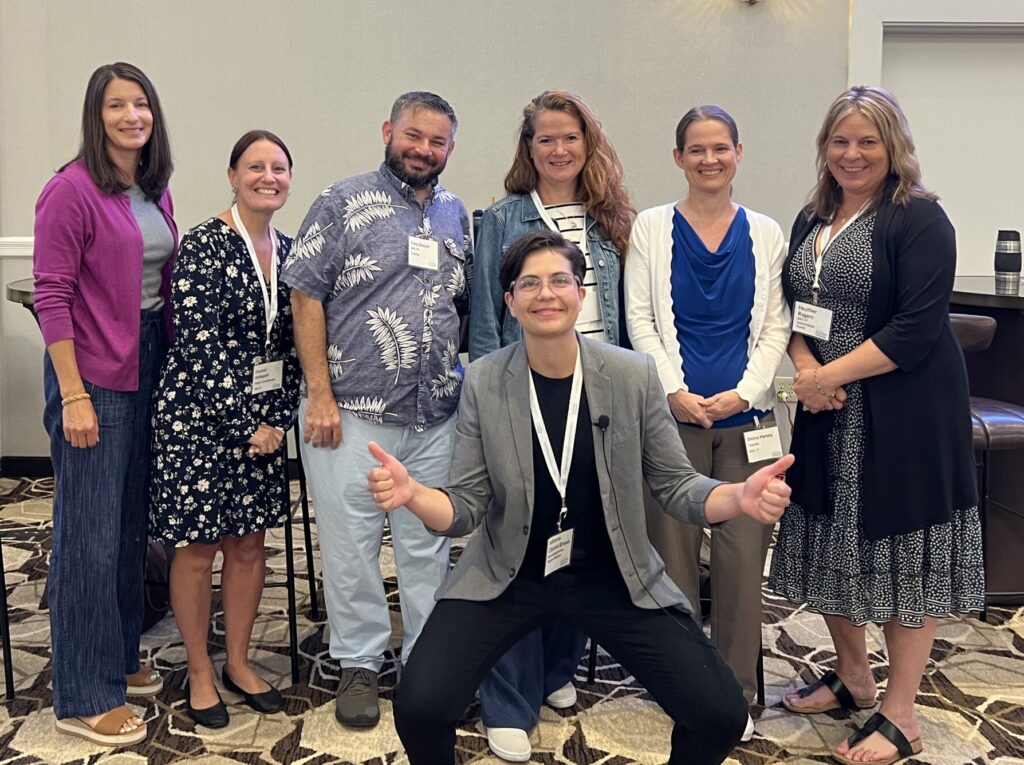
Julianna, serving as Senior Director of Systems Transformation at KnowledgeWorks, facilitated a conversation that honored both the panelists’ expertise and the collective learning that has grown over five years.
It was discussed at the panel that we must build relationships of trust with our colleagues in the same way that we foster them with our students. I need to speak in a way that moves my colleagues’ thinking forward just as I would with my students.
–Empowered Learning participant
The conference also welcomed back author, educator, and design thinker John Spencer, whose return was requested by teachers following his previous work with NHLI. His message about student agency powering new learning connected directly to the conference theme.
John challenged educators to think about what becomes possible when students are not simply completing assignments, but are empowered to make choices, ask questions, create, reflect, and take greater ownership of their learning.

His message reinforced an important idea that ran throughout the conference: student agency is not an additional program or activity. It is a way of designing learning so that students see purpose in their work, understand themselves as capable learners, and have meaningful opportunities to shape what they learn and how they learn it. When teachers combine strong instructional design, meaningful assessment, and opportunities for student ownership, new kinds of learning become possible.
Ultimately, the Summer Conference highlighted a fundamental principle: professional growth is most effective when driven by the educators themselves. Teachers possess an intimate understanding of their students and the curriculum. By sharing these insights with colleagues, they elevate both their individual craft and the collective strength of the academic community.
With Gratitude
NHLI extends its sincere appreciation to the National Education Association (NEA) for their partnership and support of PLACE and the broader work of strengthening teacher leadership. Their investment has created sustained opportunities for educators to deepen their expertise, collaborate across districts, and design learning and assessment experiences that better serve students.
We offer a special thank-you to our PLACE teacher leaders, whose stewardship has guided the project throughout its first five years. Your generosity, commitment, and willingness to share your classroom expertise have shaped PLACE into a strong professional network.
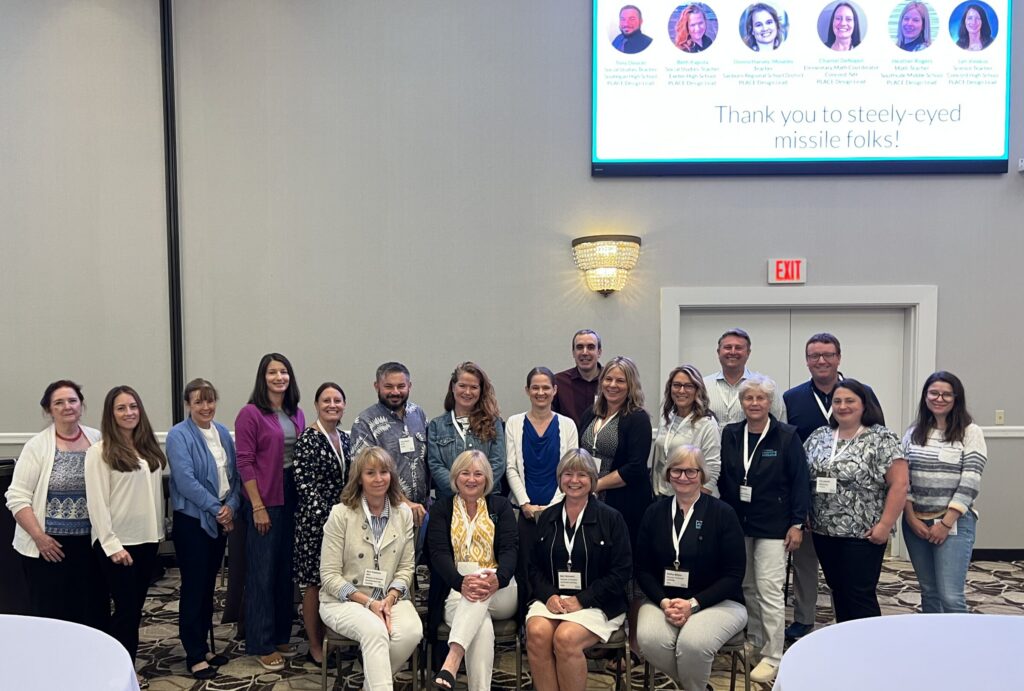
You have welcomed colleagues, facilitated content teams, developed and refined resources, examined evidence of student learning, and kept the work grounded in the realities of classrooms. PLACE’s success belongs in large part to you and your belief in the power of teachers learning from and leading one another.
We are also deeply grateful to all the sponsors of NHLI’s 2026 Summer Conference, including Southern New Hampshire University (SNHU) and the Nellie Mae Education Foundation. Their generosity made it possible to bring educators together from across New Hampshire for two days of collaboration, professional learning, and celebration. Their support represents an important investment in educators and in the future of empowered, student-centered learning throughout the state.
Please continue this and keep inviting educators in to connect and collaborate.
-Empowered Learning participant
NHLI Communications
For media inquiries contact nhli@nhlearninginitiative.org
Categories: Competency-Based Education Competency-Based Learning (CBL) Educational Leaders Educational Leadership NHLI Blogs NHLInsights, Research and Resources PLACE (Performance Learning and Assessment Consortium for Educators) Teacher Leadership Teacher Professional Development